
Cold Heading Oil Sludge Buildup: Find the Accumulation Point
In this article
Cold heading oil sludge buildup is often noticed during a tank cleanout, long after the operating problem began. The important question is not only how much material is in the tank. It is whether solids are entering faster than the system removes them, collecting in areas the treatment loop cannot reach, or being returned to circulation after they settle.
This guide focuses on locating those accumulation paths in a recirculating oil system. It is not a lubricant replacement schedule. The oil supplier's condition limits and the machine manufacturer's maintenance instructions remain separate decisions from how suspended solids are collected.
Map the dirty return before changing the separator
Sketch the route from the forming area to the tank, through existing screens or settling compartments, and back to the machine. Add any treatment loop and identify its pickup and return points. A simple drawing is often enough to reveal that the separator serves a relatively clean compartment while the dirty return enters elsewhere.
During an approved maintenance inspection, note where deposits are found. Material around the incoming return, behind a partition and below the pump pickup may have different transport histories. Do not treat all three as one uniform sludge inventory.
Record what was accessible and what was not. An apparently clean tank floor seen through one inspection opening does not establish that an isolated compartment is clear. Photos should be labelled by location so later inspections can make a meaningful comparison.
Distinguish inherited sludge from new loading
A newly installed treatment unit may begin operation with substantial deposits already present in the system. Material removed during the first period can therefore include old contamination as well as solids from current production. That initial quantity is not necessarily the future daily load.
Establish a baseline after a documented cleanout where practical, or clearly mark the first operating period as a transition. Keep production information with the solids record. A change in wire material, coating, production rate or machine mix can change what reaches the tank.
Avoid assigning a universal cleaning interval from another factory's experience. The maintenance interval should be based on this system's observed accumulation, access constraints and operating requirements. A trial provides information for that decision; it should not begin with an unsupported fixed interval.
Measure collected residue consistently
Choose a practical method that the team can repeat. A wet residue weight can be useful for tracking handling demand, but it includes retained oil. It is not directly comparable with a dry-solids measurement and should not be labelled as recovered metal mass.
Use the same receiving-container approach and document any agreed draining procedure. If the material is sampled for laboratory analysis, keep the laboratory result distinct from the operator's routine collection record. Explain changes in method so a new number is not mistaken for a process improvement.
For each collection, note the operating period covered and any interruption. Comparing one full production shift with a short trial run without accounting for the difference can make an ordinary variation look like a large change in sludge generation.

Investigate why the solids remain in the system
There are several different questions to ask. Does the dirty return pass through the treatment stage? Is the proposed feed representative of the circulating contamination? Is collected material being removed reliably? Could a blocked return path be carrying deposits back into the machine circuit?
Review these questions against the actual pipework rather than only the installation drawing. A bypass left open, a changed hose connection or a modified tank partition can alter the flow path. Record the operating valve arrangement without asking an operator to adjust an unfamiliar system during production.
The objective is to identify the location where removal is failing, not to assume that a larger centrifuge is the answer. Increasing treatment capacity will not correct an inaccessible deposit or a flow path that bypasses the contaminated compartment.
Keep oil condition and solids condition separate
Sludge can contain process particles and retained liquid, while the circulating oil may have additional condition problems. Ask the lubricant supplier which checks are needed if the oil's appearance, smell or handling behaviour has changed. Visual inspection cannot quantify viscosity or establish the oil's remaining suitability.
If water ingress or another contaminant is suspected, investigate its source. Removing some suspended solids does not demonstrate that an oil has been restored to its original formulation. Do not describe a solids separation stage as a universal treatment for every type of oil deterioration.
This separation of responsibilities also makes the maintenance discussion clearer. The fluid supplier can assess the lubricant; the machine team can investigate contamination entry; the separation supplier can test the stream proposed for solids removal.
Evaluate discharge as part of the treatment cycle
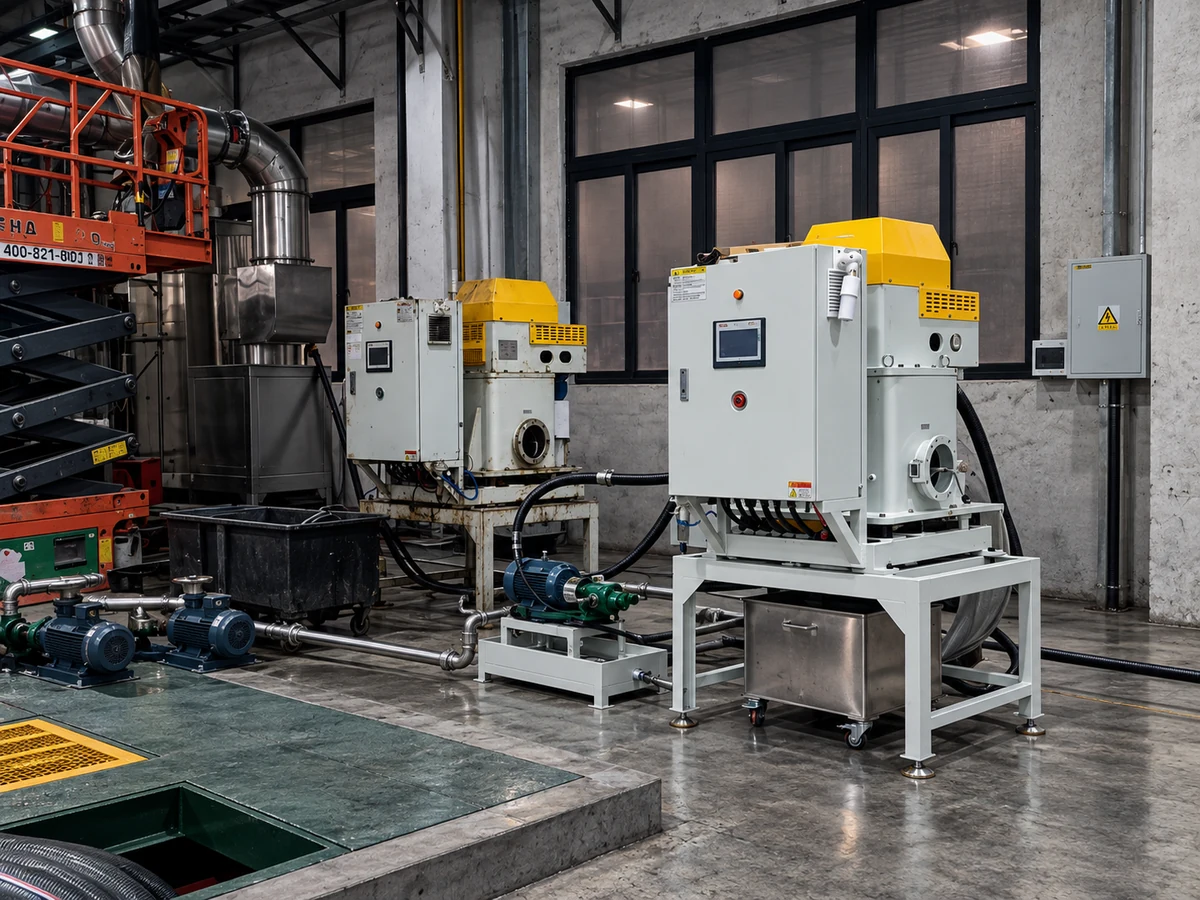
For a solids-collecting centrifuge, separating particles and removing the accumulated material are connected tasks. A unit with a suitable separation result still needs a discharge or cleaning arrangement compatible with the residue and the available maintenance window.
Ask the supplier to assess the actual material, including whether it is loose, sticky or difficult to release. Do not assume that every oily deposit will behave like a demonstration sample. Photographs help communicate the handling problem, but a representative material trial is stronger evidence.
Manual and automatic discharge arrangements should be compared on the complete operating sequence: access, interruptions, residue collection and cleaning requirements. Automatic discharge does not mean that inspection and maintenance disappear. Define who checks the collected material and how an incomplete discharge would be recognized.
Establish a maintenance decision from observed trends
Use a short review sheet that brings together deposit locations, routine residue measurements, oil condition checks and the machine symptom. A useful trend might be more frequent loading of a particular strainer, rather than a general impression that the oil is dirty.
Agree in advance which finding triggers an inspection or a process review. The trigger should be compatible with the machine's instructions and plant procedures, not a generic internet limit. After changing treatment, keep the same observation method long enough to compare similar production conditions.
The cold heading oil filtration guide explains the wider application. To discuss a persistent buildup problem, provide a tank sketch, labelled deposit photographs, the lubricant specification and collection records. That evidence helps distinguish a separation limitation from a circulation or maintenance issue before equipment is selected.
Discuss Your Cold Heading Oil
Share the lubricant details, contamination observations and proposed treatment stream.
Request a Technical Review →