
Guías TécnicasVimfun

Filtración de aceite de corte: Mantener el aceite puro limpio

Cutting oil filtration keeps fine metal and abrasive debris out of the recirculating neat oil by using a filter medium, centrifugal separation or a combination of the two. Choose the arrangement from the solids load and the oil's viscosity at working temperature: these determine both the separation task and the flow resistance the circuit must overcome.

What cutting oil filtration needs to remove

Neat cutting oil is used without dilution, so its contamination balance differs from a water-mix coolant. Metal particles arrive from the cutting zone, while wheel debris may enter during grinding. Rust, shop dust and fragments from machine maintenance can add to the load. Contamination from an upstream operation can also travel on the workpiece into a shared tank.

Separate suspended solids from changes within the oil itself. A dark sample may contain fine solids, but darkness alone does not establish oxidation, contamination level or remaining service life. Conversely, an oil that looks clear can have the wrong viscosity or an unwanted dissolved contaminant. Take a representative circulating sample and compare it with unused oil of the same grade.

Water ingress deserves its own investigation. Find leaking heat exchangers, wet parts or cleaning-fluid carryover before choosing a treatment stage. A solid-removal centrifuge should not be represented as a water-removal system unless that function is documented for its actual design. Keep incompatible oils separate; mixing them creates a fluid-selection problem that filtration may not reverse.

Why fine particles shorten oil and tool life

Fine particles can circulate through the pump and nozzle repeatedly before gravity settling removes them. At sensitive contacts, hard debris may contribute to abrasive wear or surface marking. Whether that explains a particular tool-life problem depends on particle hardness, concentration and the cutting process; a worn tool, incorrect setup or unsuitable lubricant can produce similar symptoms.

Examine the contamination where it matters. Sample the machine supply as well as the dirty tank, and inspect the nozzle, pump strainer and settled material. A full dirty tank does not necessarily mean the supply contains the same particle distribution. Likewise, a clean tank surface can hide sediment that is stirred up each time the return flow changes.

Set a process acceptance measure before changing the cleaning system. It might be less nozzle blockage, lower suspended solids in supply samples or fewer documented contamination-related marks. Record production mix and tooling changes alongside the result. The question of cómo extender la vida útil del fluido de corte also includes oil chemistry, leakage control and storage; particle removal cannot restore consumed additives or guarantee a longer change interval.

Cartridge and bag filters on neat oil

A bag or cartridge retains particles in a medium. It can suit a small or intermittent flow, or a final protection stage with a defined cleanliness requirement. The housing, seals and element all need to suit the oil and temperature. A fine element in an undersized housing can create more resistance than the circuit can accept.

Read differential pressure and flow together. As the element loads, resistance rises and delivered flow may fall. A bypass can preserve flow while changing the protection downstream. Cold oil can also restrict an otherwise usable element, so compare the routine reading with a clean-element baseline at the same temperature and flow. The housing and element instructions provide the change criteria.

Nominal and absolute labels need their test basis to make a meaningful comparison. Include element dirt capacity, oil left in the spent medium and the actual draining and replacement work. The centrifuge vs cartridge filter choice often turns on recurring solids load and the role of the final barrier, rather than the smallest size printed on a label.

Centrifugal cleaning of neat oil

A limpiador centrífugo de aceite rotates the oil so denser suspended metal and abrasive particles migrate toward the bowl wall. Oil viscosity resists that motion; smaller particles need longer to reach the collection region. The useful feed setting therefore belongs to the working oil and its contamination, rather than simply the highest pump output.

Vimfun lists 40 L/min as the VC-600's recommended flow. Its automatic model has a 2 L solids collection capacity in the manufacturer specification. The first value helps define the liquid-treatment duty; the second helps plan how accumulation and discharge fit the incoming solids load. Neither replaces the observation of how oily or adhesive deposits release during the operating cycle.

Dirty oil reaches the treatment pump after coarse chip protection. Clarified oil returns to the working inventory, away from the pickup, and the separated solids leave for a receiver. This flow split lets a side stream clean the tank while the machining supply keeps its own path. It also leaves any required final cartridge in its protection role.

A manually cleaned bowl needs an isolation, opening, cleaning and restart interval. Automatic discharge changes that task to a defined sequence plus receiver handling and inspection. Compare those tasks on the material actually collected: free-draining metal fines and sticky oil sludge impose different handling work.
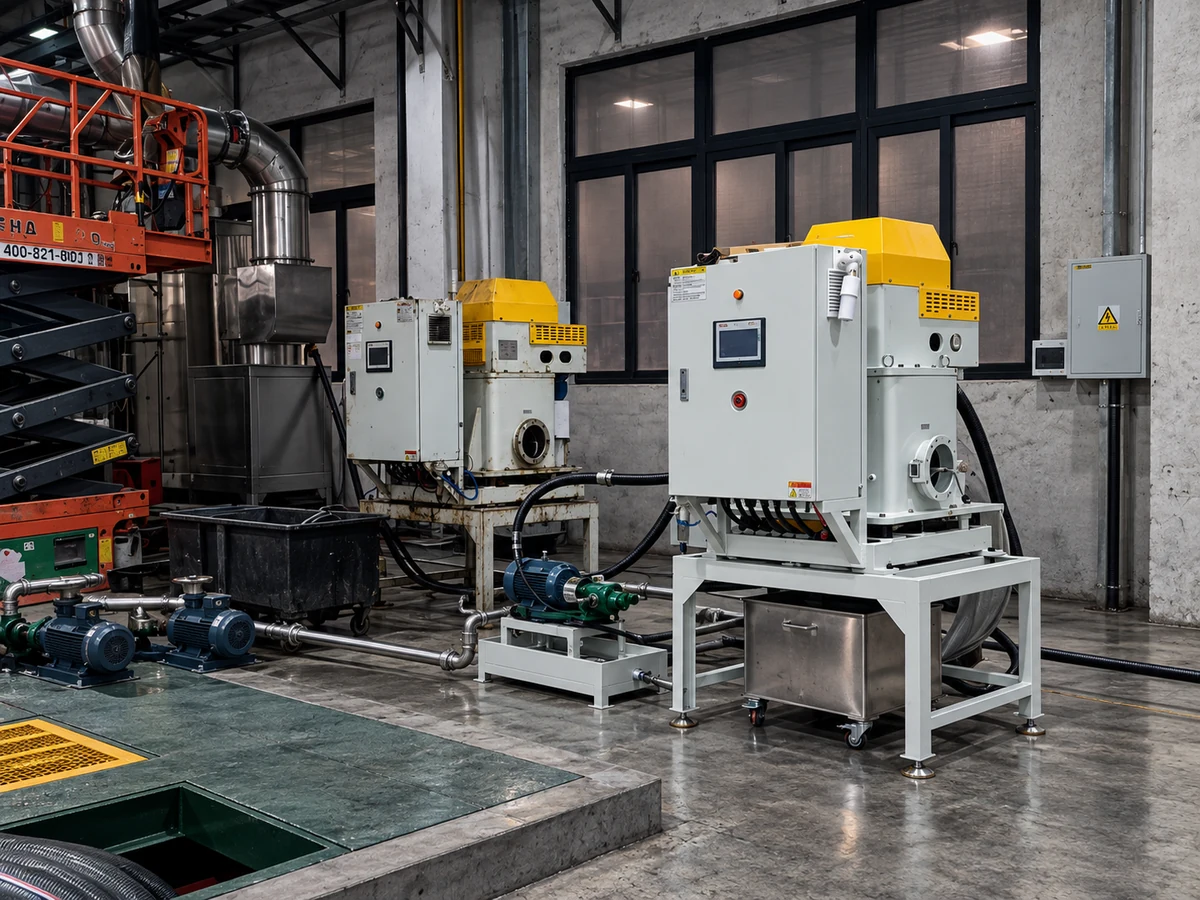
Industrial oil centrifuges with feed pumps and solids collection containers.
Vimfun centrifugal cleaning of EDM oil. Related oil-treatment demonstration. Ver en YouTube

Practical setup for one machine or a central tank

For one machine, a separate circulation loop can draw from the contaminated region of the sump and return treated oil where it helps tank circulation. Avoid placing the return beside the suction, which can repeatedly clean the same small pocket. Keep coarse chips out of the feed and leave room to service both the strainer and the separator. For an oil-fed sliding-head machine, the guide to cutting oil filtration for Swiss-type lathes shows where to take feed and return samples.

A central tank needs a different assessment. Check all connected oils for compatibility, identify production peaks and look for sludge pockets beyond the main circulation path. The cleaning loop must manage the contamination entering the system while maintaining the required supply to the machines. More loop flow does not automatically improve separation if it reduces residence time in the bowl.

The installation needs defined isolation, containment, liquid-level control and an overflow destination. During commissioning, compare tank and machine-supply samples through representative production, inspect the collected solids and record the oil carried with them. For thread-cutting work, filtración de aceite de torneado covers the application context. Sending the oil grade, temperature, contamination sample and tank sketch helps Vimfun assess the separation and circulation duties together.

Before commissioning, establish what the operators should do if treatment stops. A separate cleaning loop may fail without an immediate loss of machining flow, so its condition can be overlooked. Provide a visible operating indication and an escalation procedure. Keep a baseline oil sample and record maintenance events so a later rise in contamination can be connected with the cleaning history.

Preguntas frecuentes

Can a centrifuge replace every cutting oil filter?

No. A centrifuge can remove separable suspended solids, while a final barrier filter may still be needed for a sensitive nozzle or machine requirement. Establish the supply cleanliness target and test the proposed arrangement.

Does neat oil need concentration checks?

It does not use the water-dilution concentration control applied to emulsions. Check the oil properties and contamination relevant to its grade, and investigate accidental mixing or water ingress.

Can filtered oil be returned immediately?

Return it only after confirming that the oil remains suitable for its process. Removing solids does not prove acceptable chemistry, absence of incompatible fluids or compliance with the lubricant supplier’s condition limits.

Scroll al inicio