
Temperature at the inlet
Record the normal and highest temperature where oil would enter the separator, not only the temperature displayed at the process machine. Include start-up, long shifts and abnormal conditions.
High-temperature oil · VC-30T selection guide
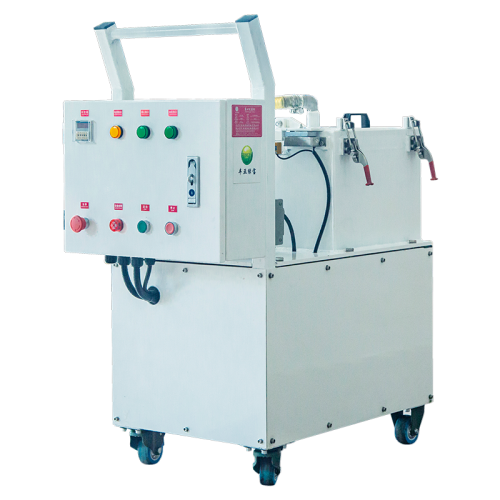
Remove separable solids from suitable hot oil with the VC-30T, rated for 0–110°C operation and planned manual sludge removal.
Start with the process
Hot industrial oil can carry metal fines, scale and other separable solids back through a production circuit. Deposits accumulate in the sump and can increase the cleaning burden. Simply waiting for the oil to cool does not remove that contamination. The practical question is whether the separation equipment can handle your actual oil temperature, viscosity and solids load.
Record the normal and highest temperature where oil would enter the separator, not only the temperature displayed at the process machine. Include start-up, long shifts and abnormal conditions.
Identify the solids you need to remove and the process problem they cause. A sample should represent the circulating oil, not just settled material taken from the bottom of the sump.
Allow for stopping the centrifuge and removing accumulated solids. A high-temperature rating does not turn a manual-discharge machine into an unattended, continuous-discharge system.
For heat-treatment and quench-oil applications, selection starts with an application review. Do not assume that every deposit is removable by centrifugation or that removing solids will restore the oil’s original process performance. Agree on the target result before choosing equipment.
Temperature is one selection condition
The VC-30T has a documented operating-temperature range of 0–110°C. This makes it the high-temperature configuration in the VC-30 manual-discharge family; VC-30P and VC-30C are listed for 0–80°C.
For an approved oil and installation, the VC-30T can be considered where an 80°C-rated configuration is unsuitable. However, the upper temperature limit is not permission to run any oil at that temperature. The pump, seals, hoses, connections and site operating procedure must also be appropriate.
Provide the oil grade and supplier’s technical and safety information. Fluid suitability, viscosity at operating temperature and the proposed installation must be reviewed together. Do not use the machine’s temperature rating as a substitute for oil-specific limits.
Do not infer suitability for flammable solvents, explosive atmospheres or pressurized service from the temperature rating.
Verified model data
| 작동 온도 | 0–110°C |
|---|---|
| 정격 처리 유량 | 960 L/h (16 L/min) |
| 고형물 용량 | 5 L |
| Total power | 75 kW |
| Dimensions (L × W × H) | 900 × 480 × 1000 mm |
| 무게 | 80 kg |
| 고형물 제거 | Manual |
Use these figures to shortlist the model, not to predict a guaranteed cleaning result. Rated flow is not a promise that every oil and particle mixture can be treated at the same rate. Confirm practical flow against the actual fluid and agreed separation target.
The 4.5 L figure describes solids capacity, not oil storage volume. It does not establish a fixed interval between cleanouts. That interval depends on the solids entering the machine and how the collected material behaves.
The footprint is only one part of installation planning. Leave access for operation, servicing and safe solids collection; confirm the final arrangement before ordering.
Compare VC-30 Models →Separation and maintenance
Centrifugal separation uses rotation to separate suitable suspended solids from the liquid. Whether a particular contaminant can be removed to the required level depends on the fluid and particle characteristics. Ask for a representative sample assessment rather than selecting solely from a temperature or flow figure. For heat-treatment duty, review the quench oil filtration application guide.
Identify the take-off point, oil level, return point and required treatment flow. A side-stream arrangement may be considered, but it must suit the actual sump and production circuit.
Agree on what will be compared before and after treatment. Visual appearance alone is insufficient to establish particle-removal performance or confirm that oil remains fit for its process.
The VC-30T requires planned manual cleaning. Follow the equipment instructions for stopping, isolation, cooling where required and access. Never open the bowl while it is rotating.
Do not describe the collected material as automatically non-hazardous or completely dry. Its handling and disposal depend on the oil, contaminants and site requirements. Removing solids also does not replace oil-condition monitoring or the fluid supplier’s maintenance guidance.
검토 maintenance and spare-parts guide when planning access and service. For high solids loading or frequent cleanouts, discuss alternative arrangements rather than assuming the compact manual model is sufficient.
Before requesting a quote
110°C is the listed upper operating temperature of the VC-30T. Whether your oil may be treated at that temperature requires confirmation of the fluid, equipment configuration and installation. Safe opening and servicing may still require cooling. The rating does not mean “no cooling under any circumstances.”
No. Solids are removed manually during a planned stop. If your process needs automatic discharge, provide the actual temperature and duty so a different arrangement can be assessed. Do not transfer the VC-30T temperature rating to another model.
This selection guide concerns separable suspended solids. Do not assume the centrifuge removes dissolved substances, reverses oxidation or restores depleted additives. Confirm oil condition and replacement criteria with the oil supplier.
사용하세요 manual-series product selector for side-by-side model decisions. The manual-discharge guide explains the operating approach, while the centrifugal oil cleaner overview covers the broader oil-cleaning category.
Send the oil grade, operating and peak temperatures, viscosity if available, sump volume, treatment-flow requirement, solids description and available supply voltage. Include a circuit sketch or installation photographs. The centrifuge sizing guide provides a wider checklist.
애플리케이션 검토
Send the oil type, temperature and solids load. We’ll review whether the VC-30T fits your process.