
Industrial Coolant Centrifuges Built Around the Application
Vimfun develops centrifugal solid-liquid separation equipment for metalworking fluids, oils and industrial slurries. Model selection starts with the real contaminant, flow, temperature and solids load.
Обсудить ваше применение →
A Manufacturer with a Defined Data Record
Vimfun uses one company-data standard across the website, quotations and technical communication. The figures below describe documented company history and cumulative activity; they are not presented as claims about equipment currently operating in every market.
Centrifugal Separation for Industrial Fluid Circuits
Our core work is the separation of suitable suspended solids from coolant, oil and process slurry. The equipment is applied as a side-stream or central treatment stage, selected from the fluid and contaminant rather than from a generic machine label.
Автоматический сброс осадка
For continuous production where solids accumulate throughout the shift and frequent manual bowl cleaning would interrupt operation. The series covers different combinations of flow, G-force and solids capacity.
Manual-discharge centrifuges
For intermittent treatment, dedicated machine sumps, portable service or high-temperature applications where a planned cleaning interval is practical. The correct configuration depends on flow, temperature and layout.
Coolant filtration systems
For single machines and central sumps where pumps, piping, controls and clean-fluid return must operate as one circuit. A centrifuge may be the main solids stage or part of a hybrid system.
Selection Begins with the Process
A coolant centrifuge is not selected from flow rate alone. Particle density and shape, fluid viscosity, normal and maximum temperature, solids generation, sump volume, discharge preference and the required production result all affect the recommendation.
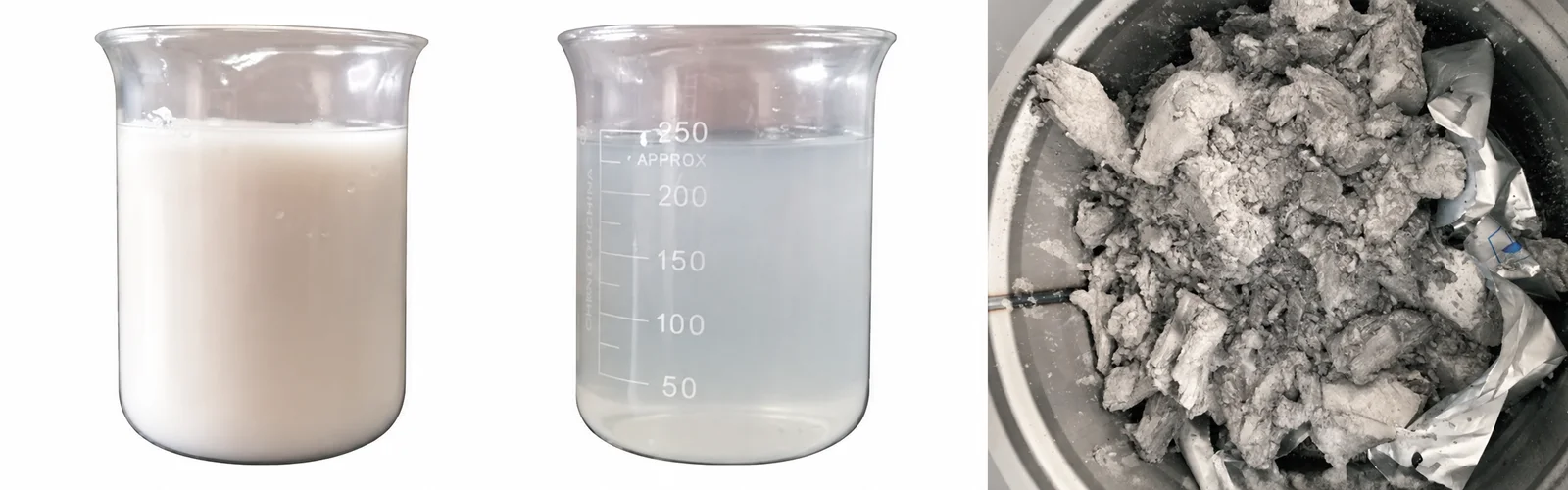
Where the result is uncertain, representative sample testing is used to define the tested model, flow, temperature, run time, feed condition, clarified sample and separated solids. This keeps the recommendation tied to observable application evidence rather than an absolute cleanliness promise.
We also state the limits of the separation stage. A solids centrifuge does not restore depleted coolant chemistry, control bacteria by itself or guarantee the removal of emulsified tramp oil. Another or hybrid method may be more appropriate when the primary problem is floating, fibrous, dissolved or chemically stable contamination.
Open the Sizing Checklist →
Production, Office and Warehouse Under One Operation
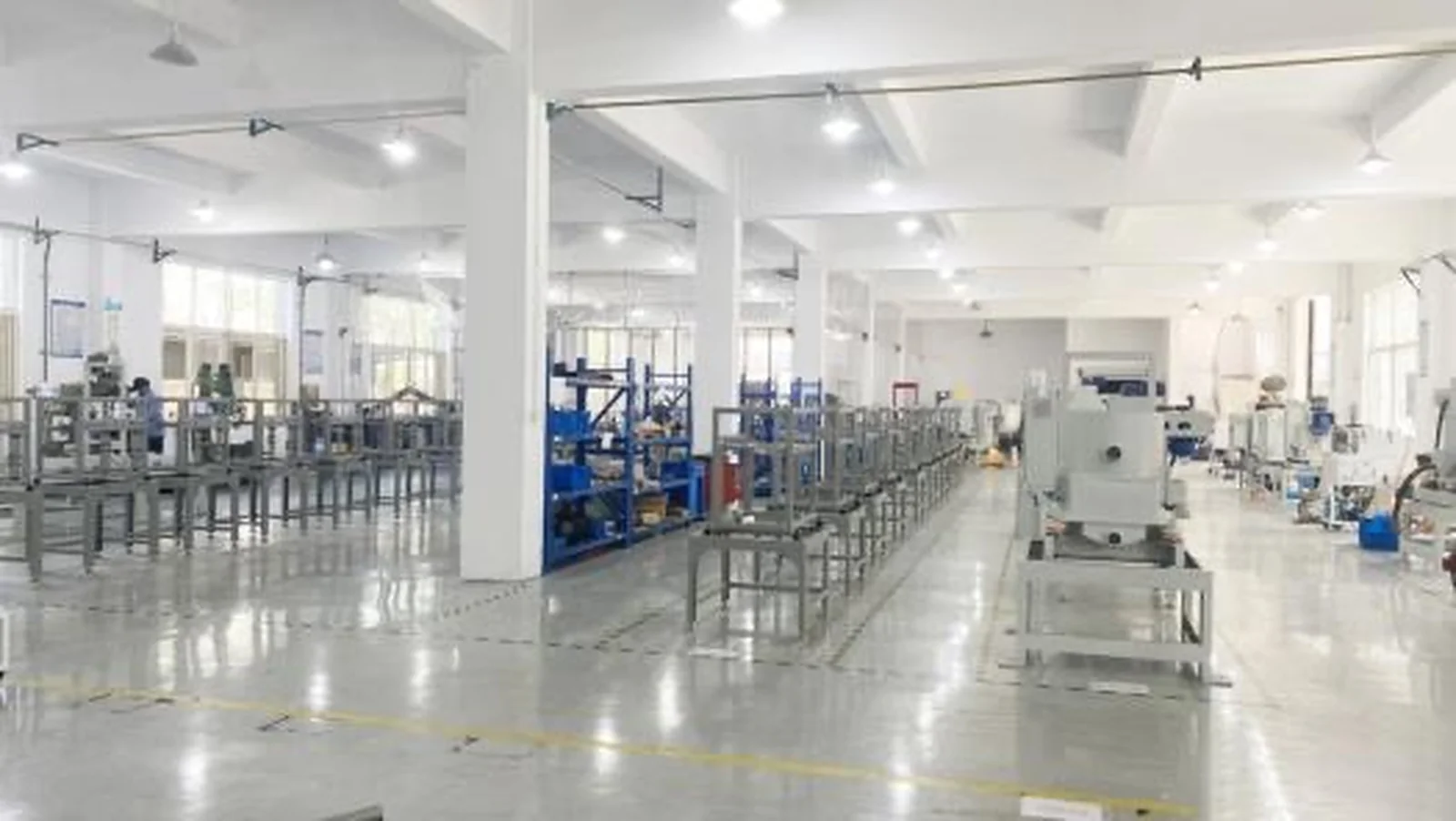
Vimfun’s documented facility totals 2,600 m²: a 1,300 m² production floor, 600 m² of office space and a 700 m² warehouse. These areas support equipment assembly, inspection, project documentation and parts storage.
The site is presented here as manufacturing capacity, not as proof of a service network outside China. Overseas projects are supported through export documentation, application communication and remote commissioning. Local service coverage should be confirmed for each project rather than assumed from the factory footprint.
Documented Systems and Product Development
The company data record lists ISO 9001 and ISO 14001 certification, CE certification, 30 patents, four software copyrights and four registered trademarks. Certificates and product-specific conformity documents can be supplied for review during the project process.
For purchasing and technical review, match the document to the quoted model, electrical configuration and destination requirements. Ask for the applicable certificate number, scope and current copy instead of relying on a logo or badge alone. Project documentation can also identify the equipment specification, inspection points and records that will be supplied with the order.
Certification scope and model-specific documentation should be checked against the equipment included in the quotation. This page does not replace the formal certificate or declaration supplied with a project.
Built for Different Solids and Fluid Circuits
We describe application experience by industry and process rather than displaying customer logos without written permission. References can be discussed anonymously and matched to the buyer’s fluid, contaminant and production condition.
From Application Data to Commissioning
Обзор применения
Confirm fluid, contaminant, flow, sump volume, solids load, temperature, voltage and the required result.
Model and test plan
Narrow the equipment range and identify where representative sample testing or layout confirmation is still required.
Quotation and documentation
Define the equipment configuration, electrical basis, scope, export documentation and the lead-time basis for the order.
Installation support
Provide documentation and remote commissioning support for installation and first start-up. Local service arrangements are confirmed project by project.
Review the Documents Relevant to Your Project
Industrial buyers often need more than a general company statement. During an application review, request the certificate, model specification, layout drawing, sample-test record, operating video or anonymous application reference that supports the purchasing decision.
We do not use unauthorised customer logos as proof. When a reference can be shared, it should describe the industry, fluid, contaminant, installed configuration and a result that can be supported by the available project record.
Start with Your Fluid and Contaminant
Send the process, coolant or oil, contaminant, treatment flow, sump volume, solids load, temperature and electrical supply. We will identify the next sizing or testing step.
