
Teknik KılavuzlarVimfun

Öğütme Çamuru: Uzaklaştırma, Susuzlaştırma ve Geri Dönüşüm

Grinding sludge contains workpiece debris, abrasive residues and retained coolant or oil. A practical removal and recovery arrangement first captures the solids from the circulation loop, then manages the wet collected material for dewatering, recycling or disposal according to the receiving route.

What grinding sludge contains

The composition starts with the material being ground. Steel, carbide and other workpieces produce different metal-bearing residues, and wheel wear adds another component. Coolant, neat oil or wash liquid retained with the solids can account for a substantial part of the collected material. Its appearance alone cannot establish dry-metal content or scrap value.

Keep a record of which machines and materials feed each collection stream. A mixed sump can combine metal types, abrasive and unrelated maintenance debris. That mixture may be harder to recycle than a dedicated stream. If recovery is a goal, discuss segregation before sludge is combined in a general waste container.

Sample both the circulating liquid and collected solids for the purpose being assessed. The first helps define the separation duty; the second helps a recycler or treatment contractor assess acceptance. For carbide sludge, include the actual workpiece and binder information available from production. Do not assume all material labelled carbide has the same composition, handling requirements or value.
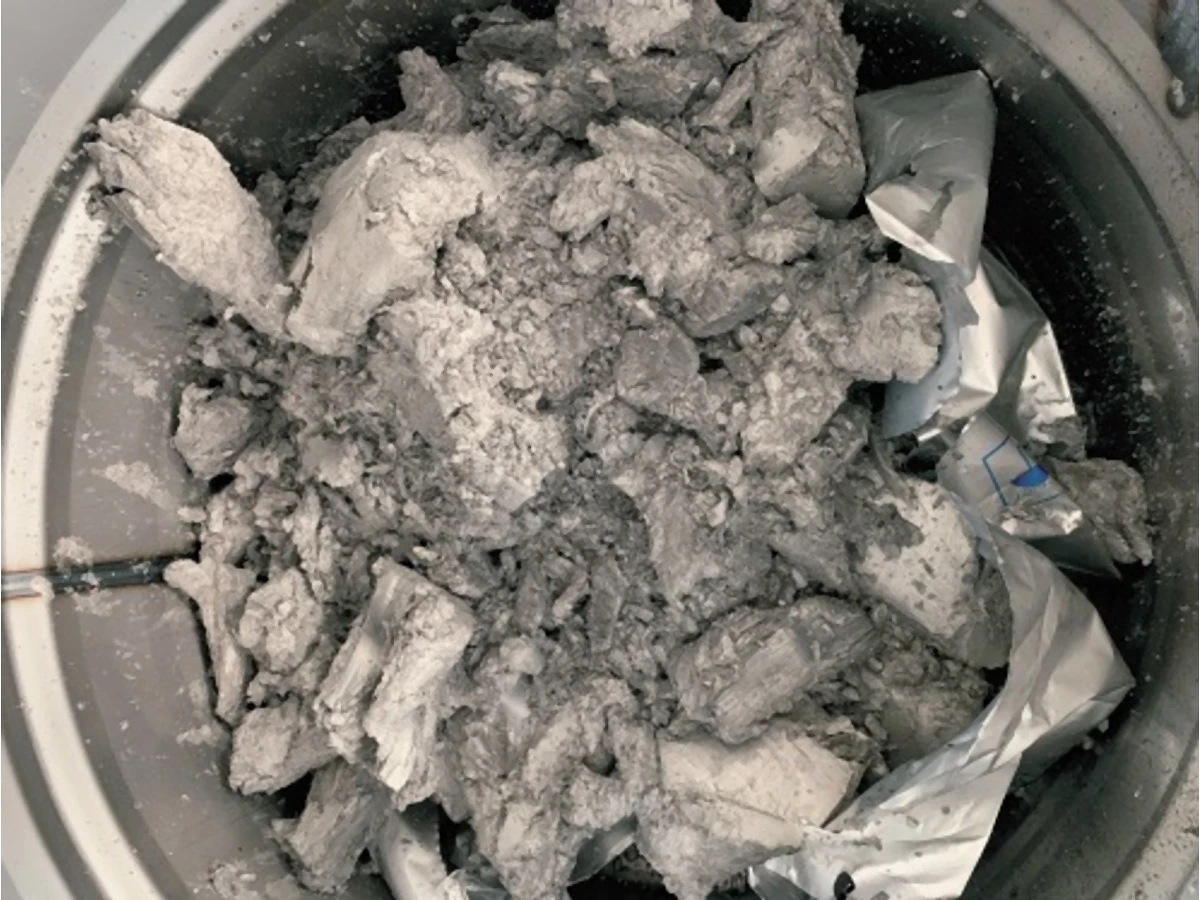
Collected solids shown in a container in the manufacturer catalogue.

Why it stays suspended in coolant

Fine particles need time to settle under gravity. Very small particles can remain in circulation while return flow and pump agitation repeatedly disturb material that has already deposited. The tank can therefore look acceptable at one point while sending a different contamination level to the grinding zone.

Inspect the route between the dirty return and supply pump. Check for direct short-circuiting, damaged baffles and sediment pockets. A pump placed above a dirty floor can draw accumulated particles during a level change even if its normal sample appears clear. Record the conditions under which each sample is taken.

The taşlama soğutucu filtrasyonu duty combines the suspended load with the required supply condition. A more viscous neat oil slows particle migration compared with a less viscous carrier under similar conditions, so size the treatment at its intended temperature. Preserve settling where it handles the coarse load, and use the fine-solids stage for material that remains in circulation.

Removing it continuously

Continuous removal captures solids from circulating liquid before they revisit the grinding contact or accumulate in inaccessible corners. Coarse or magnetically responsive debris can be handled upstream, leaving a defined fine-solids load for centrifugal cleaning.

An otomatik çamur boşaltma santrifüjü moves denser suspended material toward the bowl wall. Dirty coolant enters from the return or dirty tank region, clarified liquid goes back to the working inventory, and the accumulated material leaves through the discharge arrangement to a receiver. That outlet split is what turns circulating contamination into a manageable collection stream.

Vimfun's VC-600 manufacturer specification lists 2 L solids collection capacity. This is accumulating space, not a dry-cake rating or the amount of recoverable metal. The incoming load and deposit consistency govern how discharge and receiver changes fit the shift. Fine oily sludge may release differently from a granular residue, so examine the collected material through a full cycle alongside the liquid result.

Service access completes the arrangement. A receiver that is difficult to remove or a collection point that spills during normal handling can undo the benefit of less manual tank cleaning. Put that work on the layout before selecting the cleaning and solids routes.

Vimfun filtration of lens cutting and grinding fluid. YouTube'da izleyin

Dewatering for cheaper disposal

Dewatering removes retained liquid when draining, pressing or a further separation stage suits the sludge. Fine compressible material and oil-rich residues can behave differently, so the method follows the actual collected material and receiving requirements.

Use one material balance: incoming wet sludge equals separated liquid plus the remaining cake, allowing for recorded handling losses and additions. Wet shipping weight and dry-solids content are different measures. Longer drainage can reduce the former without changing how much metal grinding produced.

The liquid needs its own destination—return to a compatible process, more treatment or the agreed waste route. Compare that handling and any treatment energy or labour with the cake's collection charge. The reduce coolant disposal cost assessment should therefore cover every output. A drier container can be easier to ship without automatically being a cheaper total arrangement.

Recycling carbide and steel sludge

Recycling carbide and steel sludge depends on a recycler's ability to accept the particular stream. Metal content matters, but abrasive, mixed metals, liquid and other contamination can change the route. Ask for the acceptance specification, sampling method and charging basis before treating the collected material as a revenue source. For a carbide tool grinder, the carbide grinding coolant filtration guide distinguishes trough deposits from solids collected at the separator.

Keep carbide grinding coolant residues separate when a dedicated recovery route requires it. Do not combine them with a general steel-sludge stream simply to reduce container handling. Traceability helps explain an unusual assay or a rejected load, and lets production decisions be connected with the material received by the recycler.

Centrifuge sludge is the starting material for the receiving route. Send a representative sample for an actual acceptance decision and quotation, then compare any additional dewatering or segregation with that destination in view. Keeping this record from machine to receiver makes grinding sludge recycling an operating arrangement rather than an assumed metal value.

Plan sampling access before the receiver fills. A sample scooped from the top of a container may differ from the material at its bottom, especially after drainage. Ask the receiving contractor how it wants a representative sample prepared and avoid improvising a procedure for an unknown sludge. Keep the collection interval and source machine identifiable. If the production material changes during that interval, record the change rather than describing the whole container as a single-metal stream. These records support an honest comparison of recovery quotations and help explain why one load behaves differently from another, even when both came from the same grinding department.

Sıkça sorulan sorular

Can all steel grinding sludge be sold as scrap?

No. Acceptance depends on metal content, retained liquid, abrasive and other contamination. Ask the intended recycler to assess a representative sample.

Does centrifugal collection produce dry sludge?

Not necessarily. The solids can retain coolant or oil. The actual discharge consistency and any further dewatering need to be demonstrated.

Can recovered liquid go straight back into the machine?

Only if its compatibility and condition meet the process requirement. Liquid separated from sludge can still contain fine or dissolved contamination and unsuitable chemistry.

Üste Kaydır