
Vimfun / Comparisons

Coolant Filtration Methods Compared

Choose a method around the contaminant, the required fluid condition and the maintenance your shop can support. Compare six approaches before specifying a replacement or an additional treatment stage.

Uygulamanızı TartışınExplore the guide ↓

Start with the job the filter must do

Coolant filtration methods compared on price alone can produce the wrong shortlist. A device that catches large chips is not necessarily suitable for circulating grinding fines. A system that removes solids does not automatically control unwanted oil, dissolved contamination or microbial deterioration. Define the failure you need to prevent before selecting a filtration method.

Write a short duty statement: the process, fluid type, troublesome contaminant, required supply condition and operating schedule. Identify whether contamination is generated continuously or in occasional bursts. Include what happens today when treatment is interrupted: reduced flow, nozzle blockage, cleaning work or a planned shutdown. A measurable problem makes competing quotations easier to evaluate.

This guide compares six solids-control approaches: settling, magnetic separation, paper band filtration, bag filtration, hydrocyclone separation and a rotating-bowl centrifuge. They can work together. The useful question is which stage should carry the bulk contamination load and which stage must protect the final process requirement.
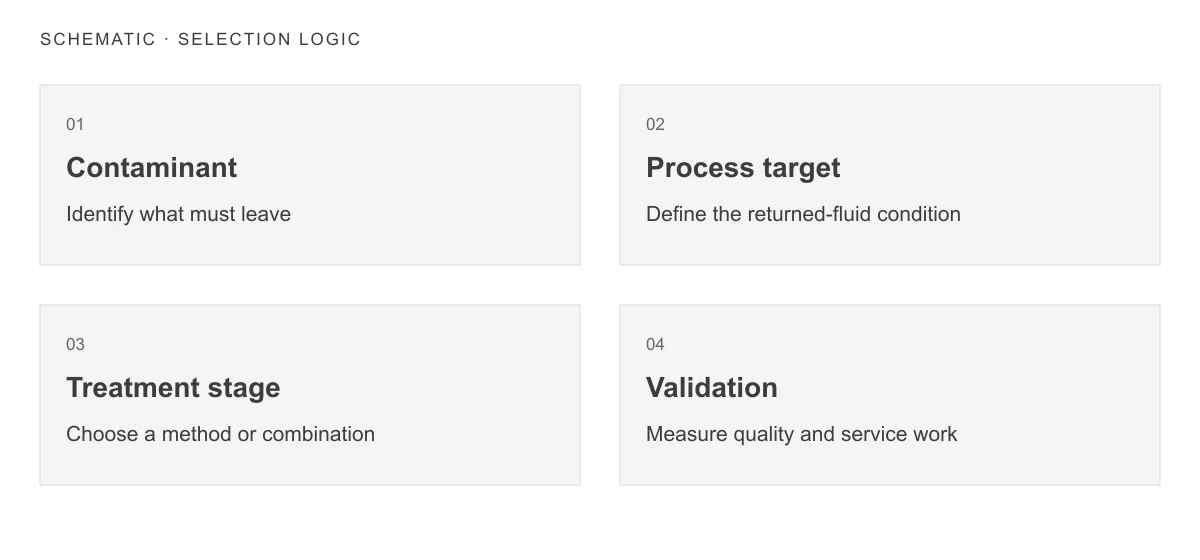
Schematic: Contaminant: Identify what must leave; Process target: Define the returned-fluid condition; Treatment stage: Choose a method or combination; Validation: Measure quality and service work.
Schematic, not a test result or an equipment drawing.

Contaminant → Process target → Treatment stage → Validation

Six methods, different separation mechanisms

Six methods, different separation mechanisms
MethodMain mechanismUseful starting applicationMain limitation to examine
Settling tankGravity and residence timeCoarse, readily settling solids with space availableFine or slowly settling material remains in circulation; tank cleaning is required
Magnetic separatorMagnetic attractionMagnetically responsive fines from ferrous machiningNonmagnetic contaminants need another treatment stage
Paper band filterDisposable barrier mediumMixed particulate loads with an appropriate mediumMedia consumption, wet waste and reliable paper advancement
Bag filterReplaceable barrier medium in a housingDefined particulate duty with manageable loadingPressure loss, seal integrity and element replacement frequency
HydrocycloneFlow-induced centrifugal separationDense, readily separable particles under stable hydraulic conditionsPerformance depends on particle properties, flow and pressure conditions
Rotating-bowl centrifugeMechanically generated centrifugal fieldSeparable fines and sludge where media handling is burdensomeSample-dependent separation; retained solids and mechanical maintenance remain

The table is a selection framework, not a universal micron ranking. Different products within each group can have very different performance. For magnetic cleaners, the relevant distinction is magnetic response, not simply whether the contamination is described as metal. Eriez's magnetic cleaner literature identifies ferrous contamination as its separation duty; this does not establish removal of aluminium or copper fines.

Compare the duty, not just the label

Ask each supplier to describe the same feed: fluid viscosity at operating temperature, particle composition, concentration and size distribution. Include the fine fraction associated with the actual failure. A high capture rate by mass can be dominated by coarse material while troublesome small particles continue circulating.

For barrier filters, request the retention efficiency and test basis behind the stated rating. For centrifugal devices, request evidence at the intended treatment flow and feed condition. A nominal filter rating, an absolute-rated element and a centrifuge sample result are different descriptions; placing the numbers in one column does not make them equivalent.

Review whether useful ingredients could be removed with the contamination. Abrasive slurries intentionally contain solids, while emulsions contain dispersed components that belong in the fluid. Select a test method that distinguishes the unwanted material from the formulation. The fluid supplier should help define continued-use criteria.

Match the layout to the point of protection

A full-flow stage treats the stream supplied to the process. Its hydraulic capacity must cover the required delivery conditions, including the condition of a loaded filter. It needs a defined response when service is necessary. An unplanned bypass can leave a critical nozzle or downstream component unprotected.

A side-stream unit treats part of a circulating sump inventory over time. It can reduce the contamination burden without carrying the entire machine supply flow, but it does not intercept every newly generated particle before the next machining pass. Positioning and mixing matter: avoid returning treated liquid directly beside the treatment suction.

Start with the existing chip conveyor, screen or settling zone before changing fine filtration. Long swarf and oversized debris may need upstream protection. For a shared sump, include the combined solids input from connected machines. See the merkezi soğutma sıvısı filtreleme sistemi kılavuzu for the wider circuit context.
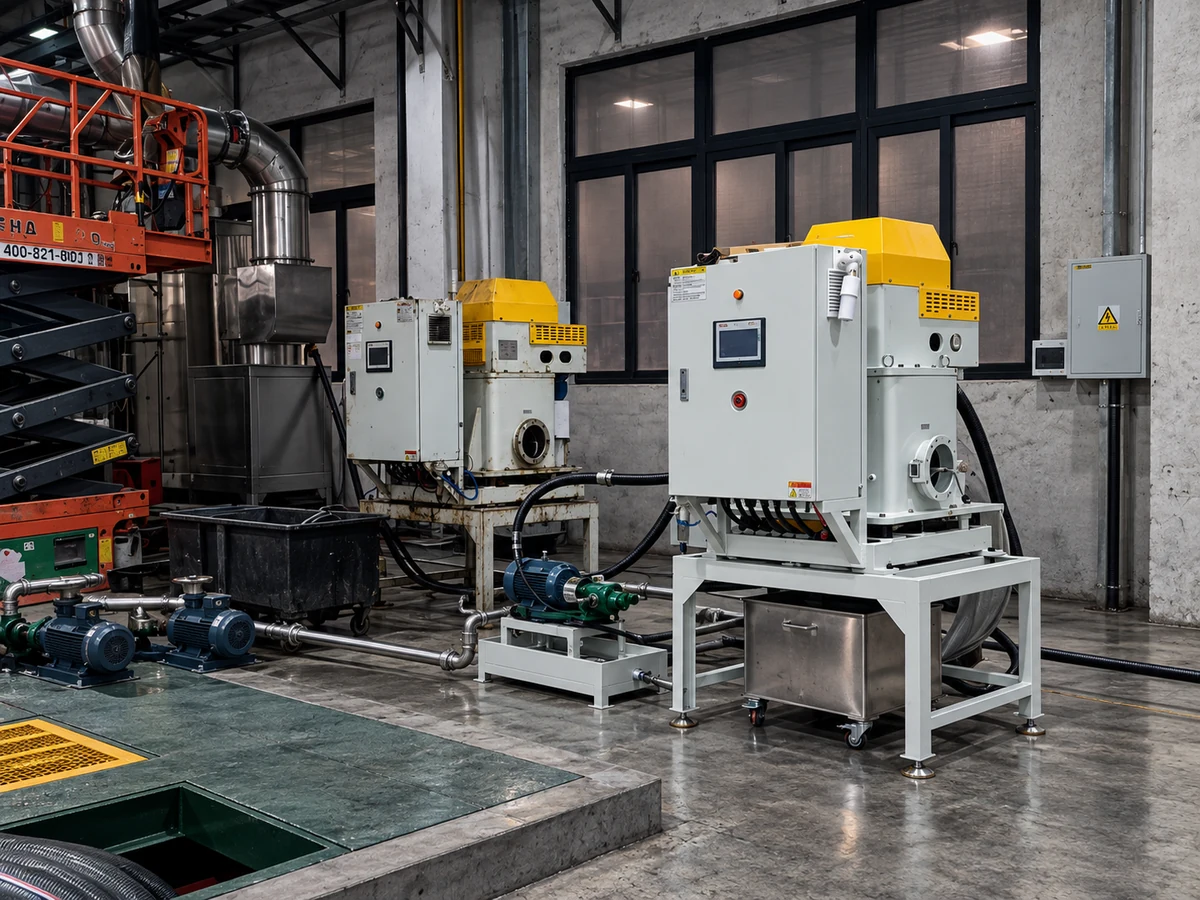
Industrial oil filtration centrifuges installed with pumps and connecting pipework
Centrifuge installation with pumps and connecting pipework. The layout illustrates integration considerations; it is not a performance comparison between filtration methods.

Consider combinations before replacing everything

For predominantly ferrous grinding fines, magnetic separation may reduce the load reaching a polishing filter. Where mixed solids rapidly load disposable media, a centrifuge can be assessed as an upstream bulk-removal stage. Neither arrangement should be assumed to meet the final cleanliness target without checking the remaining contamination.

Paper band or bag filtration can remain appropriate when the required retention is demonstrated, replacement intervals are acceptable and the plant already manages the consumables effectively. A rotating centrifuge becomes a stronger candidate when recurring media handling is a significant operational burden and sample testing shows useful separation.

Hydrocyclones deserve consideration where the solids and hydraulic operating window suit them. Settling may be adequate for part of a coarse load when space and cleanout access are available. Avoid forcing a single technology to perform coarse protection, fine polishing, unwanted-oil control and fluid-condition management simultaneously.

Put ownership costs on a common basis

Compare a complete operating year or another agreed production period. Include equipment installation, pumps, electricity, replacement media, cleaning labour, service parts and handling of collected material. A filter without disposable media still has operating costs. A small purchase price can coexist with frequent changeovers; a larger installation can be uneconomic at low utilisation.

Keep waste streams separate in the estimate. Used media, wet sludge and discarded bulk fluid may have different handling requirements and prices. Measure retained liquid rather than assuming every kilogram collected is dry material. Obtain actual local service quotations instead of importing a disposal rate from another country.

Only include avoided downtime when maintenance records support the assumption. Use the filtration payback framework to organise the calculation; the selected method must first meet the process requirement.

Run a trial that can reject the proposal

Agree on acceptance criteria before testing. Define where samples will be taken, how incoming and treated fluid will be compared, and how long the equipment must operate under representative loading. Record temperature, flow, fluid concentration where relevant, and the time since the last cleanout or media change.

Measure both treatment quality and the work needed to maintain it. Record filter changes, purge losses or centrifuge discharge intervals. Inspect whether the collected material can actually be handled by the proposed containers and downstream route. A short demonstration with lightly contaminated fluid does not establish a production cleaning interval.

Repeat critical checks after the system reaches normal operating condition. If the target is not met, consider a staged arrangement or a different method instead of translating a visual improvement into a guaranteed result.

Detailed comparisons and the next decision

For the detailed equipment comparisons, see centrifuge versus bag filters ve rotating-bowl centrifuges versus hydrocyclones. Separate tramp oil from solids-control requirements, build a disposal-cost baseline, and check the RPM-to-G calculation when comparing specifications.

For an existing paper-media installation, read centrifuge versus paper band filtration. For media handling expectations, see filterless coolant filtration. The coolant centrifuge overview explains the equipment category rather than promising a universal replacement.

Bring the fluid name, contamination sample, process target and current maintenance records to the discussion. Vimfun can assess whether solids separation is a suitable part of the treatment circuit and what information is needed before selecting equipment.

Technical references

Sources for the specific principles identified in this guide. Manufacturer examples do not establish Vimfun performance.

Define the duty before choosing equipment

Share the fluid, contaminant, operating conditions and the result your process needs. We can then discuss the evidence and test conditions required for an application assessment.

Uygulama İncelemesi Talep Edin
Üste Kaydır