
80 L/min Rated Flow
A practical step above the 60 L/min VC-600 when the return circuit needs additional circulation capacity.
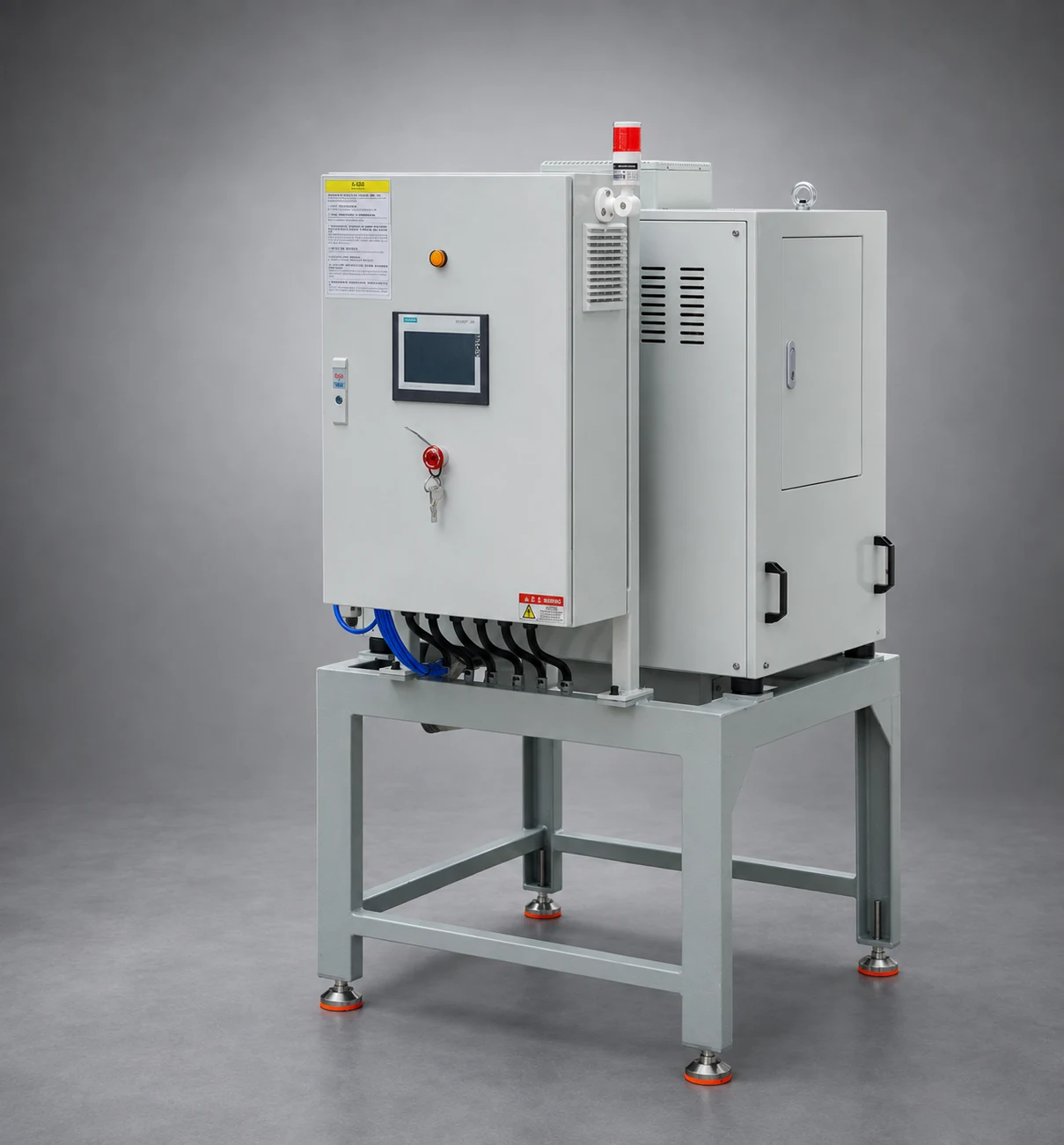
VC-800 automatic discharge coolant centrifuge with 80 L/min rated flow, 2,800 G separation force and 3.2 L solids capacity.
No online payment. Model selection and commercial terms are confirmed for each industrial application.
The VC-800 is the mid-range automatic sludge discharge model for buyers who need more circulation flow and solids capacity than the VC-600, but do not need the scale of the VC-1500. Its selection point is 80 L/min maximum rated flow, 2,800 G maximum separation force and 3.2 L solids capacity.
That combination suits a dedicated production cell, a larger machine sump or a smaller shared circuit. It should not be selected from flow alone. Fluid viscosity, temperature, contaminant density, particle behavior, solids generation and the required sump turnover all affect the operating point and separation result.
A practical step above the 60 L/min VC-600 when the return circuit needs additional circulation capacity.
Centrifugal force separates compatible suspended solids without disposable paper or bags in this stage.
Additional holding capacity supports longer operating intervals than the smaller 2 L model under comparable loading.
Rated flow is a machine selection limit, not a guaranteed commissioned flow for every coolant or oil. Final duty must be confirmed from the actual process.
Contaminated coolant or oil is pumped from the machine sump into the rotating separation bowl. Denser suspended solids move outward under centrifugal force and collect in the solids zone. The separated liquid leaves the unit and returns to the process circuit.
A correctly sized pump supplies fluid from the sump. Stable feed and suitable pipe routing help maintain repeatable separation.
The bowl runs at up to 4,500 rpm and develops up to 2,800 G under the confirmed operating configuration.
Collected solids are discharged automatically according to the control cycle instead of waiting for manual bowl cleaning.
Automatic discharge reduces routine operator intervention, but it does not make the system maintenance-free. The bowl area, discharge path, seals, pump, pipework and controls still require inspection at intervals matched to the process.
Centrifugal separation targets separable suspended solids. It does not restore depleted additives, remove dissolved contamination or replace every oil-water or biological-control process.
The table uses the approved Vimfun model reference. Pump duty, piping, control logic, electrical configuration and commissioning flow are confirmed separately for each project.
| Specification | VC-800 |
|---|---|
| Maximum rated flow | 80 L/min |
| Bowl speed | 4,500 rpm |
| Maximum separation force | 2,800 G |
| Solids capacity | 3.2 L |
| Installed power | 3.09 kW |
| Overall dimensions | 1620 × 1050 × 900 mm |
| Machine weight | 406 kg |
| Standard electrical supply | 380V / 50Hz, three-phase |
| Optional electrical supply | 400V / 50Hz or 480V / 60Hz on request |
| Sludge handling | Automatic sludge discharge |
| Filter media | No disposable media in the centrifugal separation stage |
Maximum figures describe the model envelope. The selected operating speed and flow may be lower where the fluid or separation target requires more residence time.
Representative component close-ups support installation and maintenance discussions. Final connection, pneumatic and monitoring arrangements are confirmed against the delivered configuration.
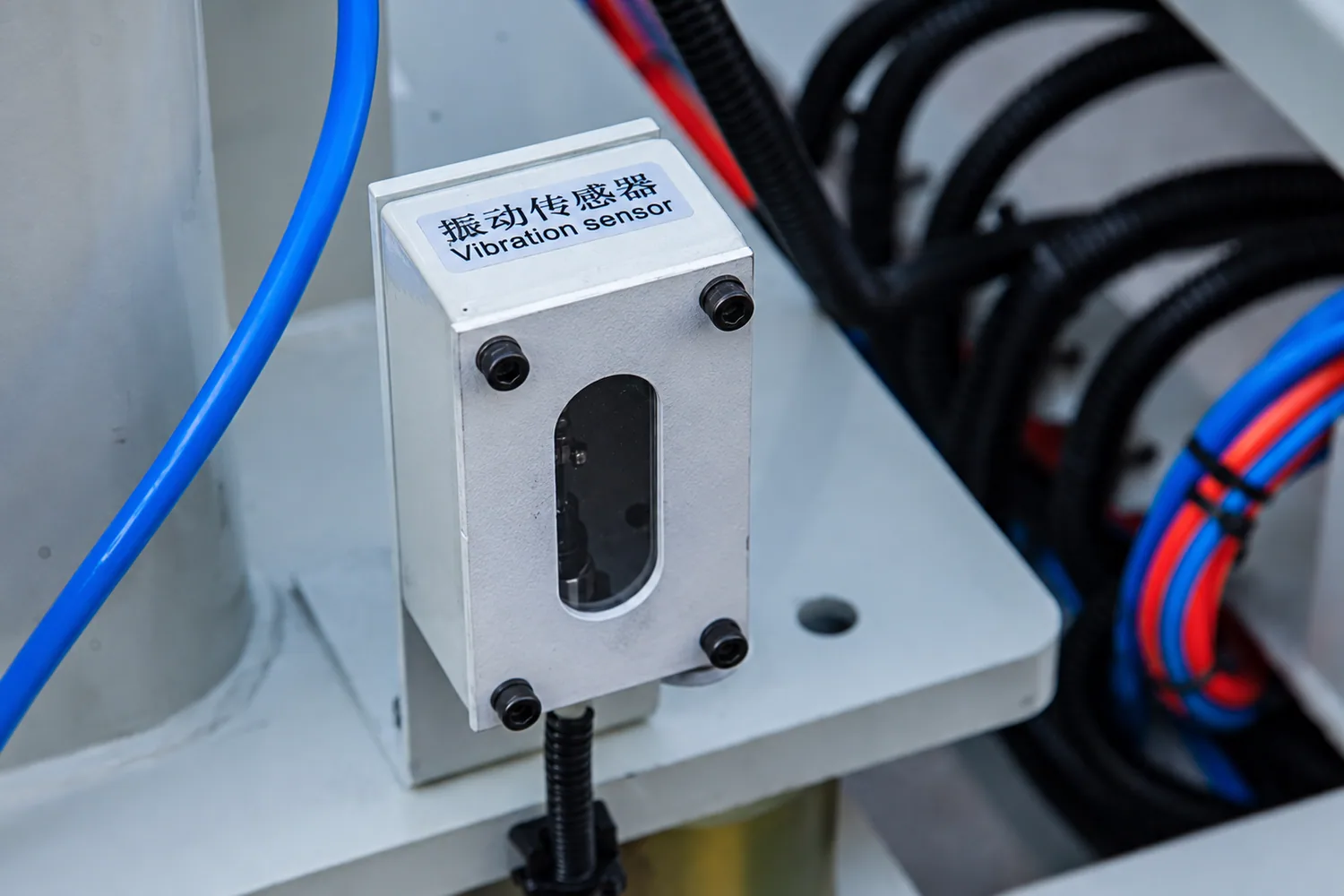
A dedicated vibration sensor provides a monitoring point for machine operating condition.
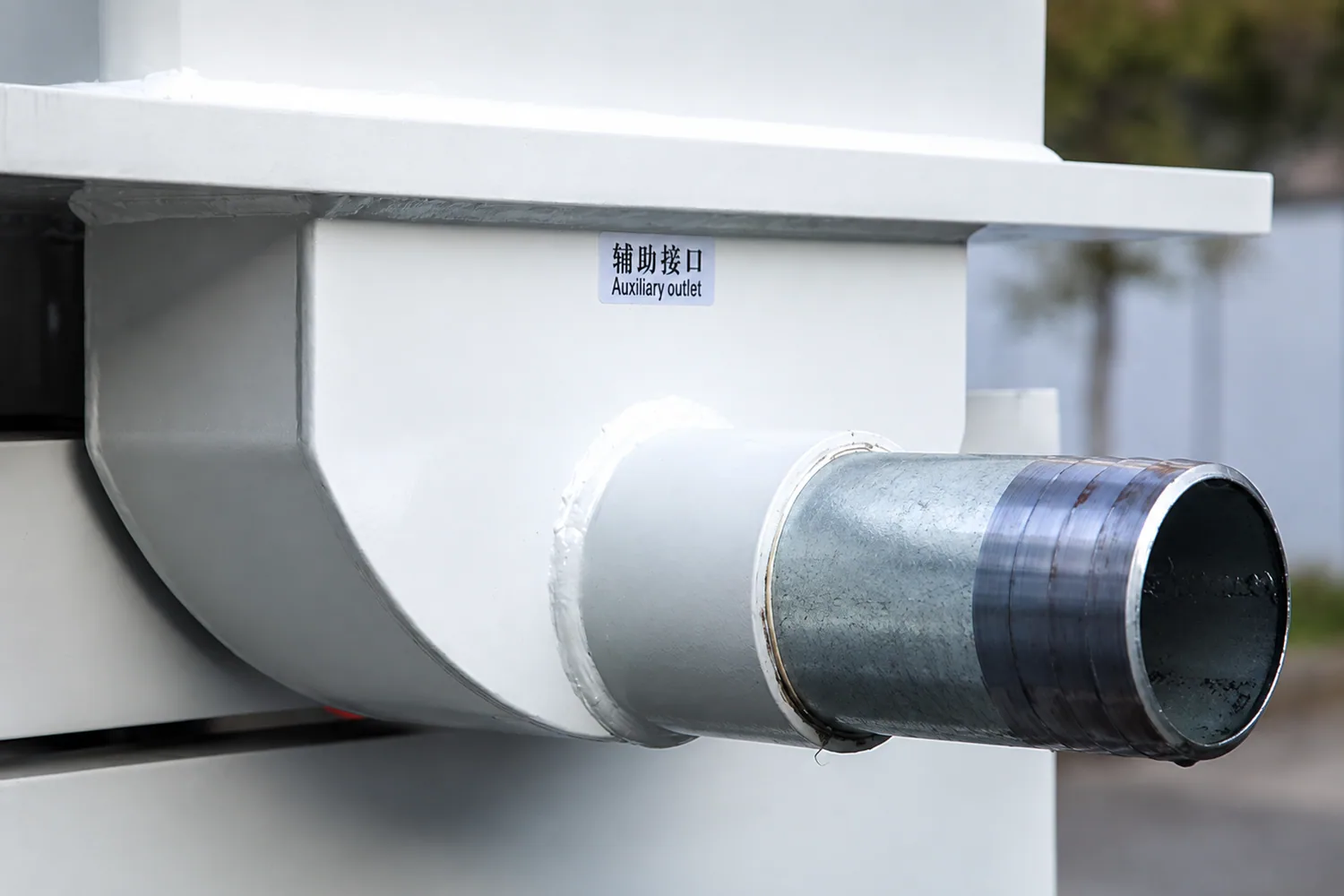
The auxiliary outlet is shown for connection and installation review. Final pipe routing is confirmed for each project.
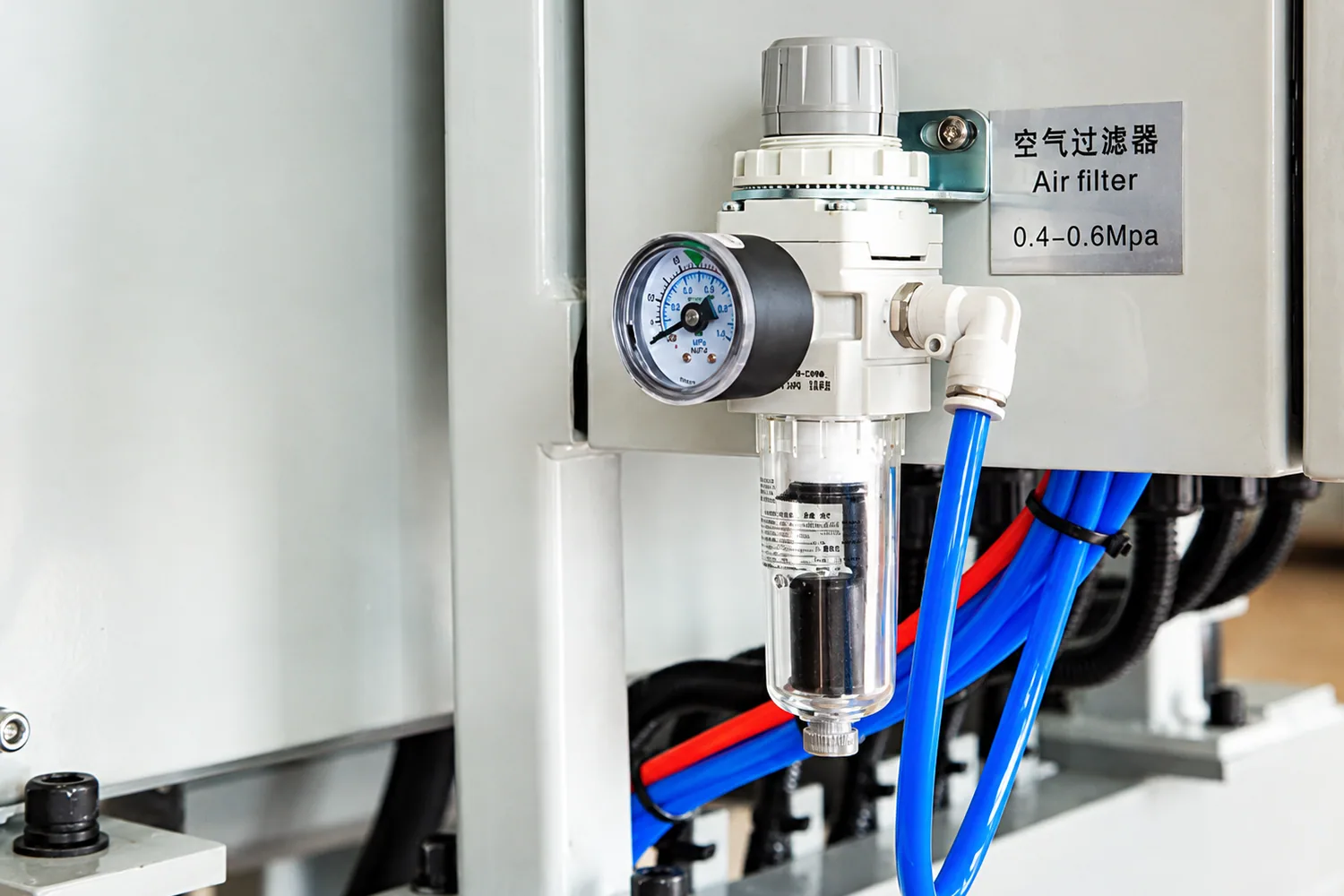
The air preparation assembly filters and regulates the pneumatic supply used by the delivered machine configuration.
Record the working sump volume, number of connected machines and the time within which the circuit should be processed. A nominal pump rating does not show how much flow reaches the separator after elevation, pipe loss, valves and return restrictions.
Identify whether the solids are steel fines, swarf, phosphate coating residue, scale, abrasive particles or another material. Particle density and behavior matter because centrifugal separation depends on the difference between the liquid and solid phases.
The amount of dry or compacted solids produced per shift helps determine whether 3.2 L capacity provides a practical discharge interval. A circuit with moderate flow but very high solids loading may require a larger-capacity model.
Provide fluid type, concentration, viscosity and operating temperature. A sample test is recommended when particle behavior, additive sensitivity or the required cleanliness result is uncertain.
Use the coolant centrifuge sizing checklist before requesting a final configuration.
The VC-800 is most useful where the application needs a balanced combination of circulation flow, separation force and solids capacity. It is not assigned to one industry; the process conditions determine whether it is suitable.
For a larger machining cell or shared coolant sump carrying separable metallic fines and chips.
Review grinding coolant filtration →For compatible cold forming lubricant circuits where iron fines and phosphate coating residue accumulate continuously.
Review cold heading oil filtration →For drawing-fluid circuits carrying metal fines, subject to viscosity, temperature and material confirmation.
Review wire drawing filtration →Other applications may be suitable after sample testing. When contamination includes free tramp oil, stable emulsions, dissolved material or biological growth, centrifugal solids separation may need to be combined with another treatment method.
The VC-600 leads on separation force, the VC-1500 leads the next step in circulation flow, and the VC-2000 provides substantially more solids capacity. The VC-800 occupies the middle selection point. Choosing the largest flow number by default can reduce residence time without solving the actual contamination problem.
| Model | Rated flow | Maximum G | Solids capacity | Primary selection direction |
|---|---|---|---|---|
| VC-600 | 60 L/min | 6,500 G | 2 L | Highest G requirement |
| VC-800 | 80 L/min | 2,800 G | 3.2 L | Balanced mid-range duty |
| VC-1500 | 150 L/min | 1,860 G | 8 L | Multiple-machine central sump |
| VC-2000 | 200 L/min | 1,700 G | 20 L | High solids capacity |
A sample test and system review are more reliable than selecting from one specification. View the automatic sludge discharge series for the family overview.
Confirm pump duty, suction point, pipe route, return position and service clearance before installation. Poor circuit layout can short-cycle cleaned fluid or restrict the intended flow.
Check the bowl area, discharge path, seals, vibration condition, pipework and controls at intervals based on solids loading and operating hours.
380V/50Hz three-phase is standard. 400V/50Hz and 480V/60Hz configurations are available on request and must be confirmed before order.
Automatic sludge discharge removes accumulated solids without disposable filter media in the centrifugal stage, but the discharged material still requires suitable collection and disposal or recovery according to the process and local requirements.
For service planning, see centrifuge maintenance and spare parts. Warranty, commissioning scope, spare-parts supply and project documentation are defined in the quotation.
No. It is the maximum rated flow used for model selection. The commissioned flow depends on viscosity, temperature, pipe loss, pump duty, solids load and the required separation result.
No. It means the centrifugal separation stage does not consume paper rolls or filter bags. Inspection, cleaning and wear-part maintenance remain necessary.
No. The two technologies handle contamination differently. Fine separable solids may suit a centrifuge, while floating material, dissolved contamination or specific polishing duties may require another or hybrid method.
Provide the fluid, contaminant, sump volume, present flow, solids generated per shift, operating temperature, number of machines, available voltage and the result you need.